
Fertigation 101: Growing More With Less Water
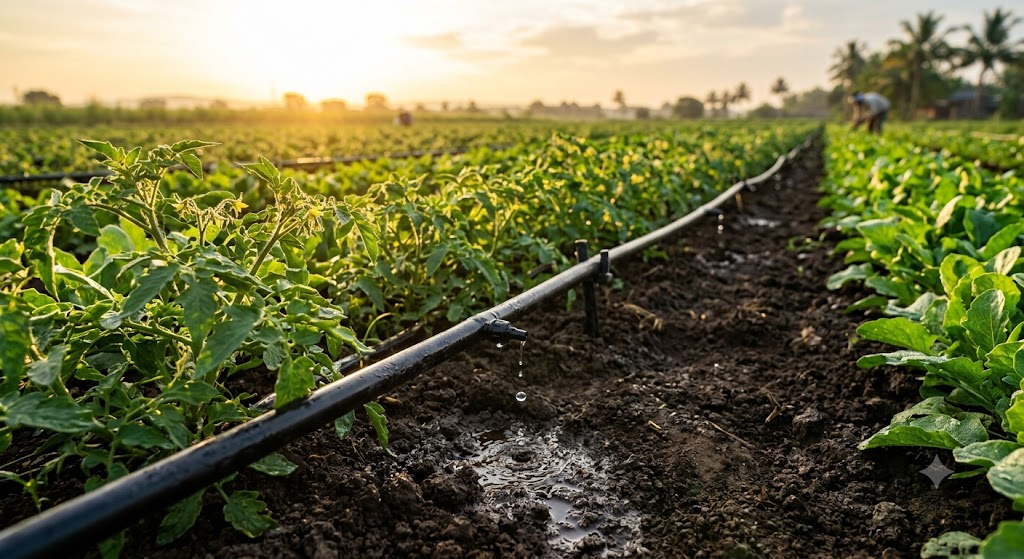
Water is the resource every farmer worries about most — and rightly so, with groundwater tables falling and erratic monsoons becoming the norm rather than the exception. The good news: the same drip or sprinkler system you’re already using for irrigation can also be your most efficient fertilizer delivery system. That combination is called fertigation, and it’s one of the highest-ROI shifts a farm can make.
What Is Fertigation, Exactly?
Fertigation is simply the practice of dissolving fertilizer in irrigation water and delivering both together — through drip lines, sprinklers, or micro-irrigation systems. Instead of broadcasting granular fertilizer onto soil and hoping rain or irrigation washes it down to the root zone, you’re delivering dissolved nutrients directly to where the roots are actively absorbing.
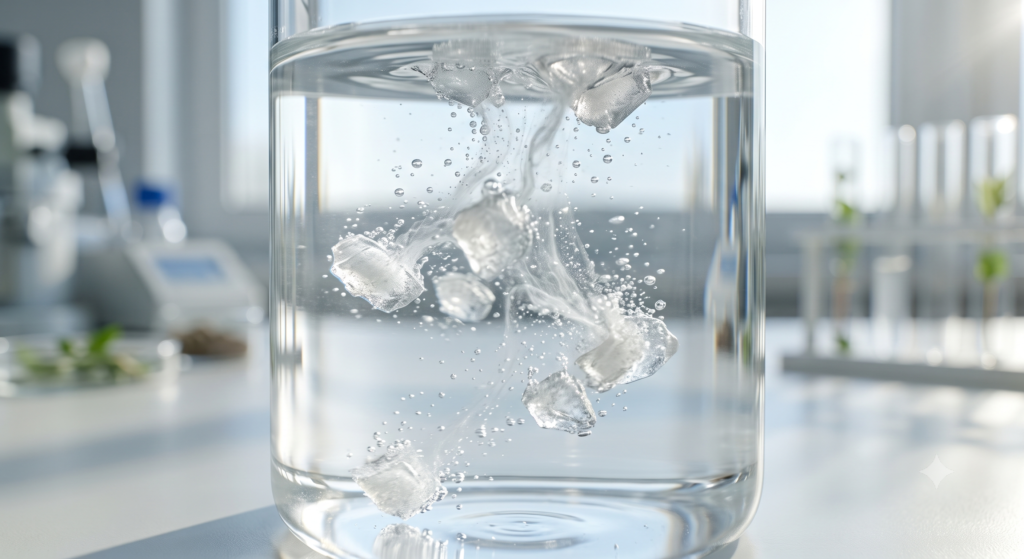
This only works well with water-soluble fertilizers (WSF) — specially formulated nutrient blends that dissolve completely and stay in solution without clogging drip emitters or leaving residue.
Why Water-Soluble Fertilizers Beat Granular for This Job
| Factor | Granular Fertilizer | Water-Soluble Fertilizer (Fertigation) |
|---|---|---|
| Nutrient placement | Broadcast, uneven reach to roots | Direct to root zone |
| Water efficiency | Needs rain/flood irrigation to activate | Delivered with precise irrigation |
| Application frequency | Bulk, infrequent | Small, frequent doses matched to crop demand |
| Nutrient loss (leaching/volatilization) | Higher | Significantly lower |
| Labor required | Manual broadcasting | Minimal once system is set |
The core advantage is precision. Instead of giving the crop one large nutrient dose and hoping it lasts, fertigation lets you feed little and often — matching nutrient supply to what the plant is actually demanding at each growth stage.
A Practical Fertigation Schedule by Growth Stage
Every crop is different, but the general principle holds across most row crops, vegetables, and fruit crops:
- Establishment / early vegetative stage – Higher nitrogen ratio to build root and shoot structure. Light, frequent doses.
- Vegetative growth / pre-flowering – Balanced NPK with attention to phosphorus for root and flower bud development.
- Flowering and fruit set – Increase potassium and add boron/calcium where needed — this stage determines fruit number and quality.
- Fruit development / bulking – Potassium-heavy WSF blends to support size, weight, and sugar/dry matter accumulation.
- Maturation / pre-harvest – Taper nitrogen, reduce overall feeding to support ripening and shelf life.
The principle to remember: little and often beats heavy and occasional. Frequent smaller doses through fertigation reduce nutrient loss and avoid the “feast or famine” stress that comes from infrequent heavy feeding.
Avoiding the Common Fertigation Mistakes
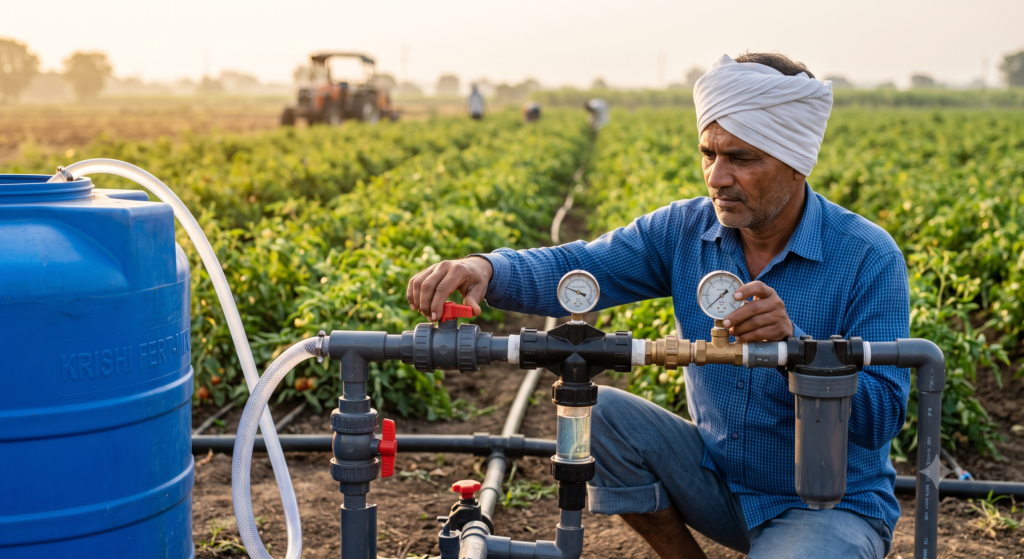
- Using ordinary fertilizer in a drip system. Non-WSF-grade fertilizer often contains insoluble fillers that clog emitters over a season — an expensive mistake to fix.
- Ignoring water quality. Hard water with high calcium/bicarbonate content can react with certain fertilizers, causing precipitation inside your lines. Get your water tested before settling on a long-term blend.
- Fertigating at the wrong time of day. Early morning or evening fertigation generally improves uptake efficiency and avoids excess evaporation loss.
- One-size-fits-all dosing. Nutrient ratios should shift with crop stage — running the same blend from planting to harvest leaves yield on the table.
- Skipping a flush cycle. Always finish a fertigation cycle with a short period of plain water to clear nutrient residue from the lines and prevent clogging.
Where Kropnex Fits In
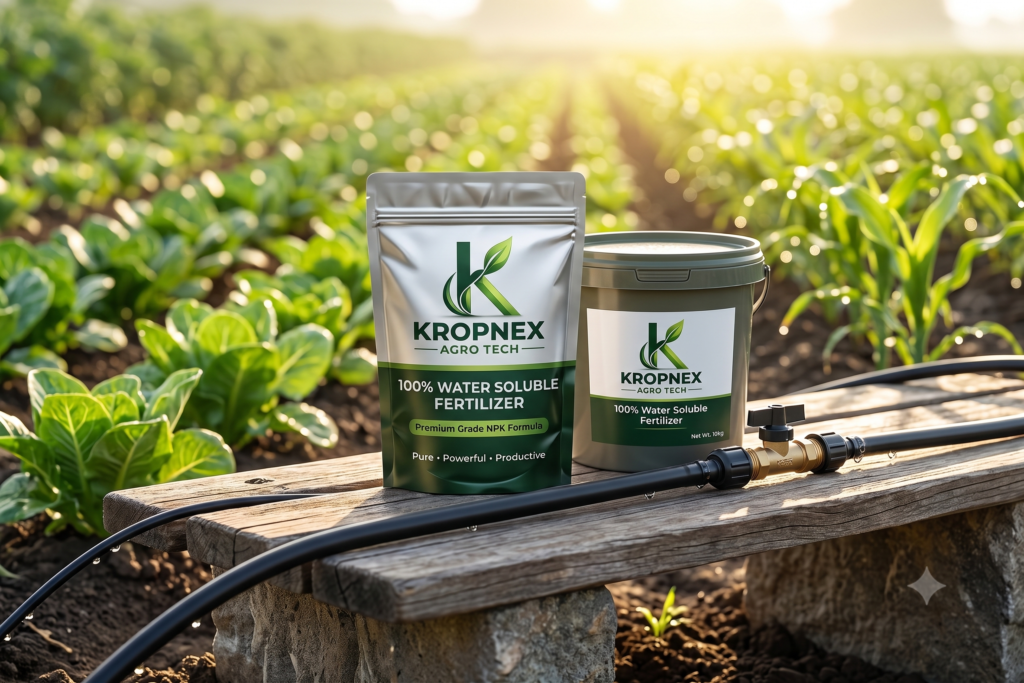
Our Water Soluble Fertilizer range is formulated for complete dissolution and stability across different water qualities, so you get consistent nutrient delivery through drip or foliar application without the clogging or residue issues that come with non-WSF-grade products. Paired with our Plant Growth Promoters, we help you build a stage-by-stage feeding program rather than a one-size-fits-all schedule.
Frequently Asked Questions
Can I use fertigation with sprinkler irrigation, or only drip? Both work. Drip gives the most precise root-zone delivery and the best water efficiency; sprinkler fertigation works well for crops without drip infrastructure, though nutrient placement is less targeted.
How much water savings can I realistically expect from switching to fertigation? Most reports across drip-fertigated systems show meaningful water savings compared to flood irrigation with broadcast fertilizer, alongside better nutrient use efficiency — though exact figures vary by crop, soil, and system design.
Will water-soluble fertilizer work in my existing drip system without upgrades? In most cases yes, provided your system has a basic fertilizer tank, venturi, or dosing pump. We’re happy to advise based on your current setup.
Want a fertigation feeding schedule built around your specific crop and irrigation setup? Get a free quote from Kropnex Agro Tech or reach out on WhatsApp — we’ll help you map out a stage-by-stage nutrition plan.